Project at a Glance
Project Title | Strengthening Community Resilience and Readiness in Response to Anticipated Monsoon Flood in Jamalpur, Bangladesh (ProMIS No. BGD1055) |
Duration | 15 July 2023 – 30 November 2024 (completed) |
Locations | Pogaldigha and Pingna Unions, Sarishabari Upazila, Jamalpur district — two of the most flood-vulnerable unions along the Jamuna River |
Funded By | Welthungerhilfe (WHH) Anticipation and Preparedness Fund (AF) — EUR 44,975 (approx. BDT 5.6 million) |
Implemented By | ANANDO — Promotion of Culture and Youth Resource Development, in partnership with Welthungerhilfe Bangladesh |
Direct Participants | 500 extremely vulnerable families selected through Participatory Rural Appraisal, each receiving an unconditional multipurpose cash grant of BDT 6,060 (EUR 50) |
Indirect Reach | The entire population of the two unions benefited from repaired water points, latrines, flood shelters, early warning messaging and trained volunteers |
Sectors | Anticipatory humanitarian action, disaster preparedness, cash assistance, WASH, disaster risk reduction, local capacity building |
Why This Project
Jamalpur sits on the front line of Bangladesh's monsoon flooding. In 2024, forecasts proved exactly right: the Jamuna crossed the danger level at Bahadurabad on 3 July and stayed above it until 20 July — the highest water level since 2020 — leaving around 150,000 people waterlogged across 45 unions of the district. Traditional humanitarian aid arrives after such a disaster; anticipatory action moves before it. Using evidence-based flood forecasts from FFWC, GloFAS and the Google Flood Hub, this project pre-positioned preparedness in two of Sarishabari's most vulnerable unions and released cash to the poorest families in the critical window between forecast and peak — so that households could protect their homes, food, health and assets before the water arrived.
Project Objective
To augment the preparedness of vulnerable families and fortify their resilience in the face of anticipated monsoon floods, through two complementary segments: anticipatory action — short-term readiness measures triggered by flood forecasts — and flood preparedness, equipping families, communities and local institutions with the knowledge, resources and strategies to respond.
What the Project Delivered
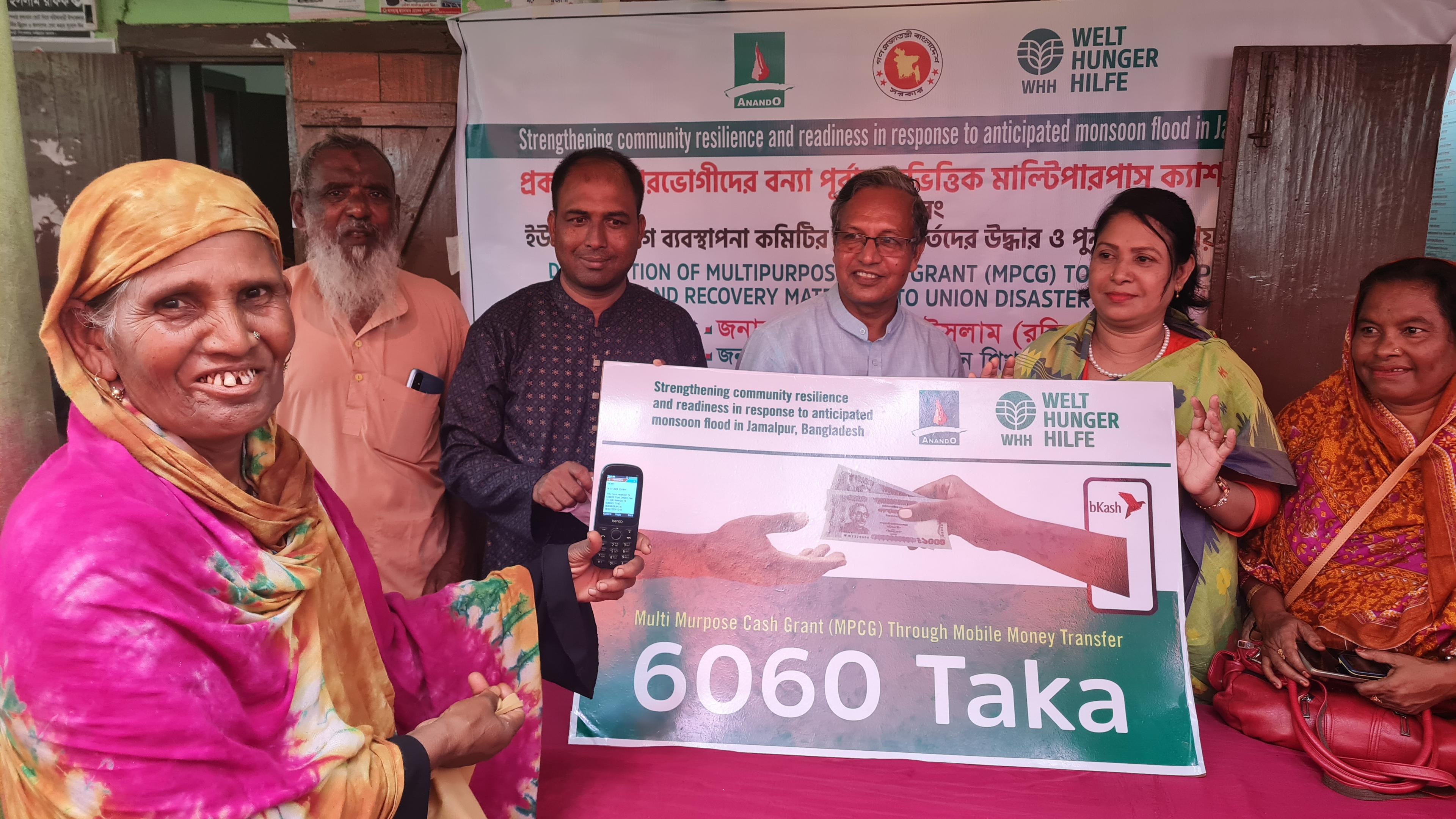
• Anticipatory cash at the trigger: When the Early Action Protocol for Monsoon Riverine Flood was activated on 4 July 2024, WHH automatically released funds, and all 500 families received their BDT 6,060 grant on 11 and 14 July — 449 through personal bKash mobile money accounts opened under the project, and 51 by documented hand cash.
• Safe water: 26 tube wells repaired with 20 new raised platforms (target: 15) and community-level mechanics trained, safeguarding access to safe water during floods.
• Sanitation: 30 latrines repaired or upgraded, including 3 communal wash blocks (target: 20), protecting sanitation and dignity in flood conditions.
• Flood shelters: 2 flood shelters repaired with plinths raised (target: 1), expanding safe refuge in both unions.
• Livestock protection: 4 rounds of livestock vaccination camps with the Upazila Livestock Office — after which not a single cattle death from the covered diseases was reported among participating households, compared to routine losses the previous year.
• Rescue equipment: Rescue and recovery material sets (10 items each) handed over to both Union Disaster Management Committees.
• Early warning: 12 awareness meetings and refresher sessions on flood preparedness, plus a risk communication system linking UDMC members, volunteers, religious leaders and group leaders to relay forecast updates by hand mike, group meetings and announcements at religious centres.
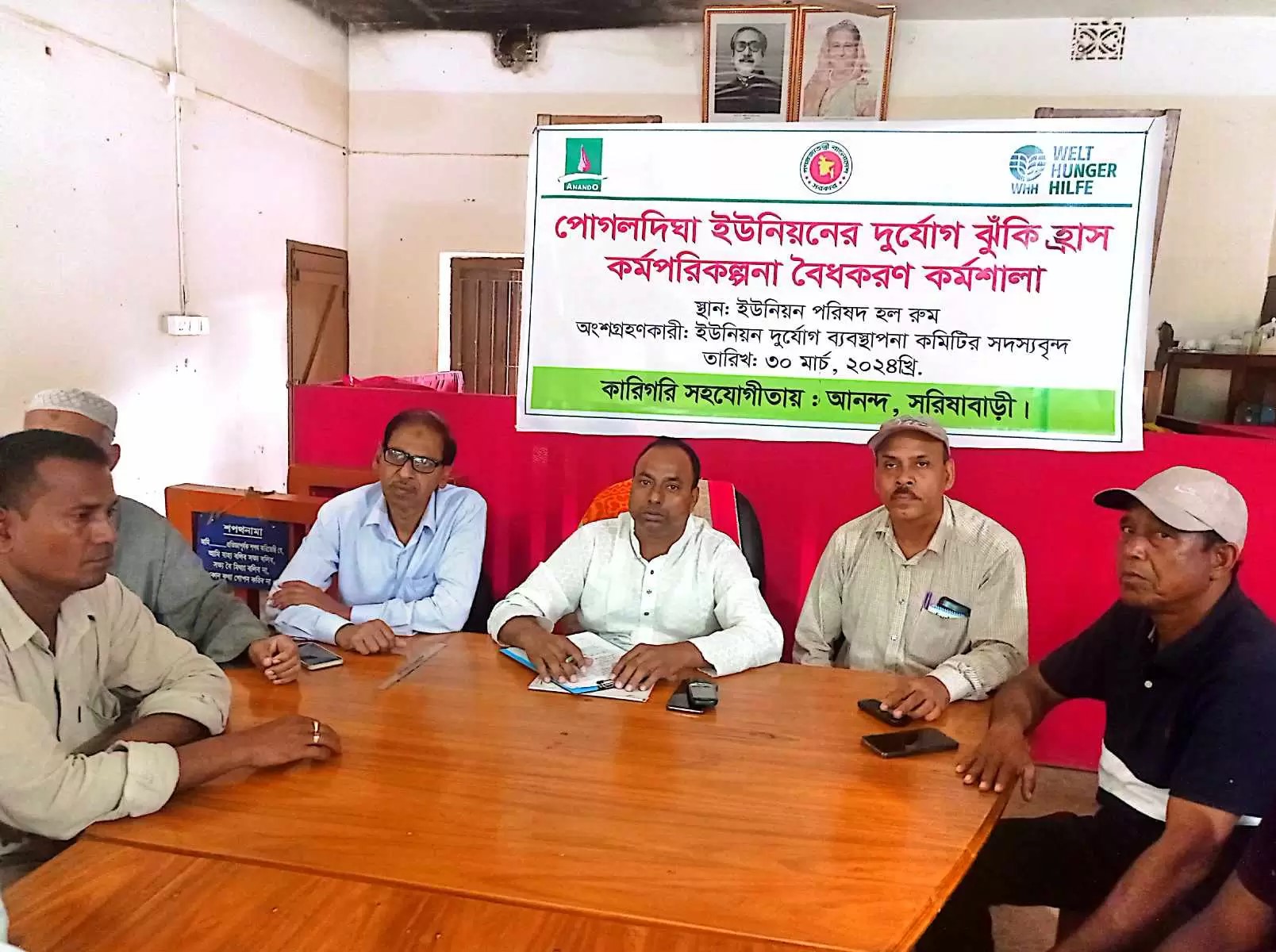
• Local capacity: 30 community volunteers (16 men, 14 women) formed and trained in each union's volunteer group, and 86 UDMC members (60 men, 26 women) trained through day-long capacity building workshops.
• Risk planning: A full Community Risk Assessment and Risk Reduction Action Plan conducted, validated at union and upazila level, and formally submitted to the authorities.
Verified Results
An independent Post Distribution Monitoring survey verified the quality of the response:
• 100% of surveyed participants received the exact grant amount without paying any favour or bribe to anyone.
• 100% were satisfied with the distribution process, citing well-managed distribution points, no delays and respectful treatment.
• 90% waited less than 30 minutes to cash out their grant with the bKash agent.
• 91% understood how they were selected and received full project information from ANANDO volunteers and staff.
• Families spent the cash where it mattered most: 59% on food, 19% on medical costs, and 7% on livelihood and productive assets.
• 70% of households reported that the grant met their basic needs for at least a month.
• All planned activities met or exceeded their targets — tube wells, latrines and shelters all surpassed plan.
Our Approach and Lessons
The project demonstrated the core promise of anticipatory action: pre-agreed triggers, pre-registered beneficiaries and pre-positioned systems turned a flood forecast into cash in families' hands within days. Digital payment through bKash brought speed and transparency — and opened first-time mobile money accounts for hundreds of vulnerable households — while hand-cash provisions ensured nobody was excluded. Community volunteers, trained committees and a validated Risk Reduction Action Plan remain in place in both unions as durable preparedness assets. The project also captured honest lessons: engagement of some committee members during training needs strengthening, and the risk communication system, still largely traditional, should be digitalised alongside conventional channels — insights that ANANDO is carrying into its next generation of anticipatory action work.