Project at a Glance
Project Title | Self-Help Renewable Energy Enterprises Focusing on Solar and Clean Cookstoves (Project No. 7396) |
Duration | 15 April 2024 – 15 October 2027 (3.5 years) |
Location | Khagrachari district, Chittagong Hill Tracts (CHT) |
Funded By | German Federal Ministry for Economic Cooperation and Development (BMZ) through Lichtbrücke e.V., Germany |
Implemented By | ANANDO — Promotion of Culture and Youth Resource Development |
Direct Participants | School-dropout youth trained as solar and clean cookstove technicians (15 per batch, around 50% young women), 1,500 families gaining access to energy-efficient clean cookstoves, and 2,000 community members sensitised on climate change and clean energy |
Key Facility | A dedicated Solar Workshop and Clean Cookstove Production and Dissemination Centre, established in Khagrachari in 2024, with residential dormitory facilities for trainees |
Sectors | Renewable energy, climate change mitigation, vocational skills, youth employment, women's participation, health, green enterprise development |
Why This Project
Most families in the project region of Khagrachari have no access to electricity or clean cooking technologies. Households cook and heat with biomass on highly inefficient traditional stoves — driving CO2 emissions, filling homes with hazardous smoke, and leaving around 90% of women and children suffering from related health problems. At the same time, the region has a high number of school dropouts and very few employment opportunities, and climate-friendly technologies are neither produced nor sold locally, so no market exists for them. This project tackles both problems at once: it trains unemployed young people to install, produce and maintain solar systems and clean cookstoves, and simultaneously builds the local awareness and market that turn those skills into lasting livelihoods.
Project Goal
To establish sustainable, clean energy devices — solar panels and energy-efficient clean cookstoves — in the region while reducing youth unemployment, by creating employment opportunities for youth through the distribution of climate-friendly technologies and the creation of a self-sustaining local market for these products.
Specific Objectives
• Solar skills: A self-managed vocational training workshop producing qualified solar energy technicians — 30 school dropouts trained in installation and maintenance of solar panels, 50% of them female, earning their own income after graduation.
• Clean cooking: A self-managed production workshop for energy-efficient clean cookstoves — trained youth operating the workshop independently and earning their own income, while 1,500 families are sensitised to use clean cookstoves daily.
• Awareness and health: 2,000 community members sensitised on the effects of climate change and the advantages of climate-friendly technologies, with the health burden of traditional cooking on women and children reduced by 30%.
What We Do
• Operate the Solar Workshop and Clean Cookstove Production and Dissemination Centre — completed in 2024 — as the project's training, production and market hub.
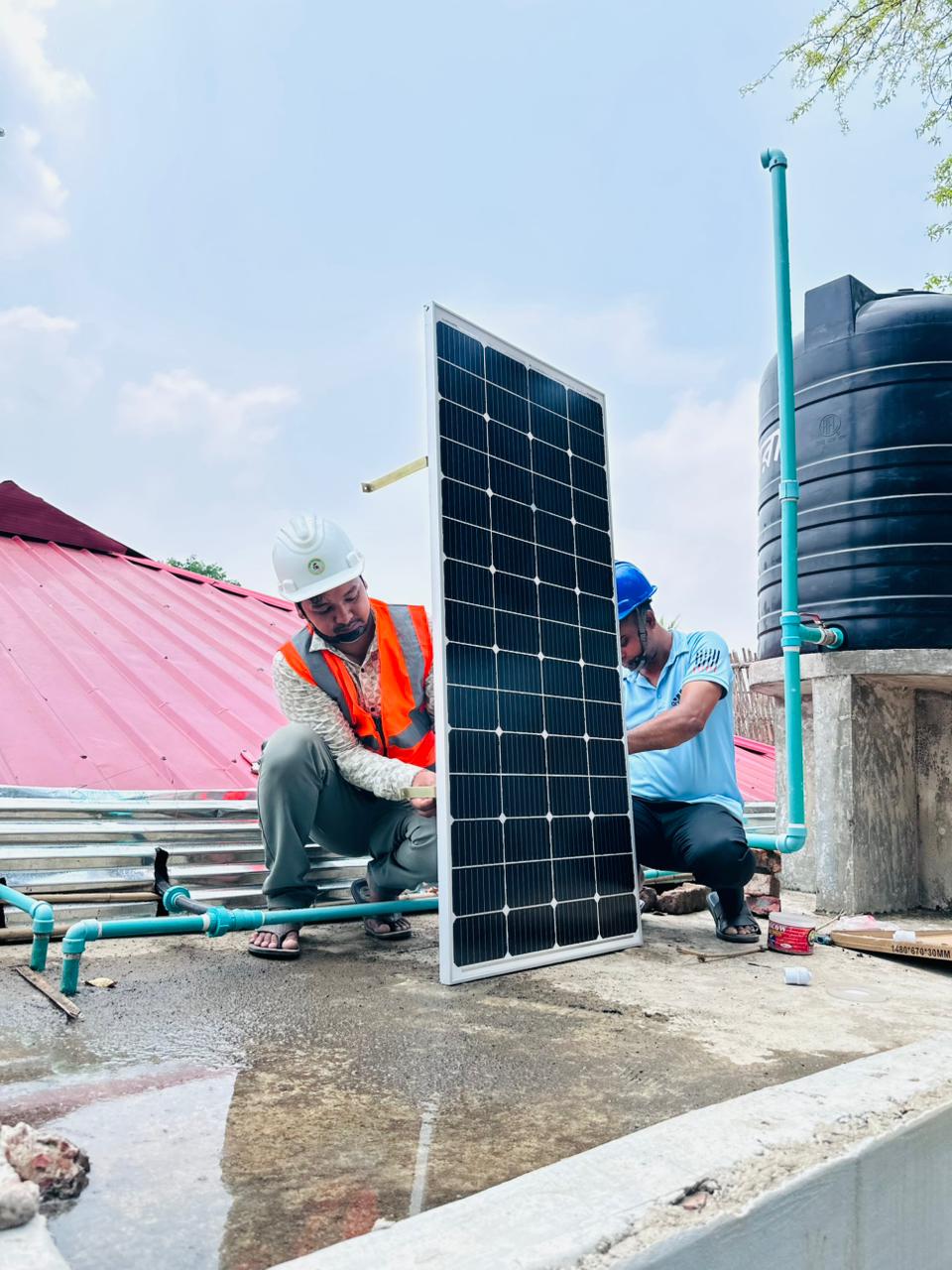
• Deliver residential vocational training in the renewable solar energy trade: one batch of 15 school-dropout youths per year receives technical training, teaching books, dormitory accommodation and meals, examinations, and graduation certification.
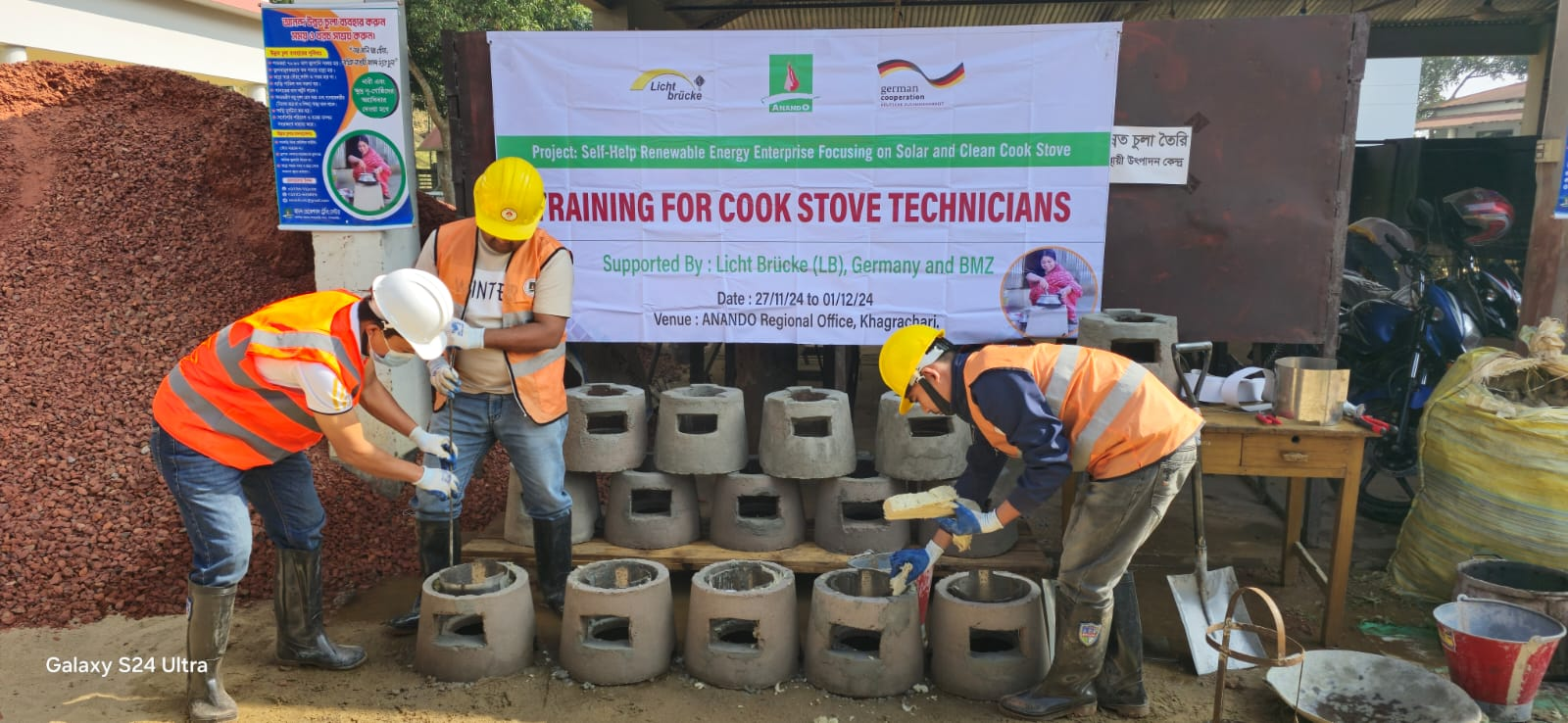
• Train youth in clean cookstove production, functioning, repair and maintenance, enabling them to run the production workshop independently.
• Provide start-up support to families and graduates to scale up clean cookstove adoption and enterprise activity — 595 beneficiaries supported in 2025 alone.
• Build business capability through training on solar business operation, entrepreneurship development, market development sessions and established business networks, plus sharing sessions with guardians and solar enterprise owners.
• Run social marketing and behaviour change communication — school sessions on renewable energy, film shows, cooking demonstrations at local markets (hat/bazar), orientation workshops and community volunteers — to build demand for clean energy.
• Hold sessions on gender equality, women's and human rights, and communication, presentation and networking skills, embedding equity in the technical training.
• Advocate at Upazila and district level and mark occasions like World Environment Day to anchor clean energy on the local public agenda.
Progress So Far (by end of 2025)
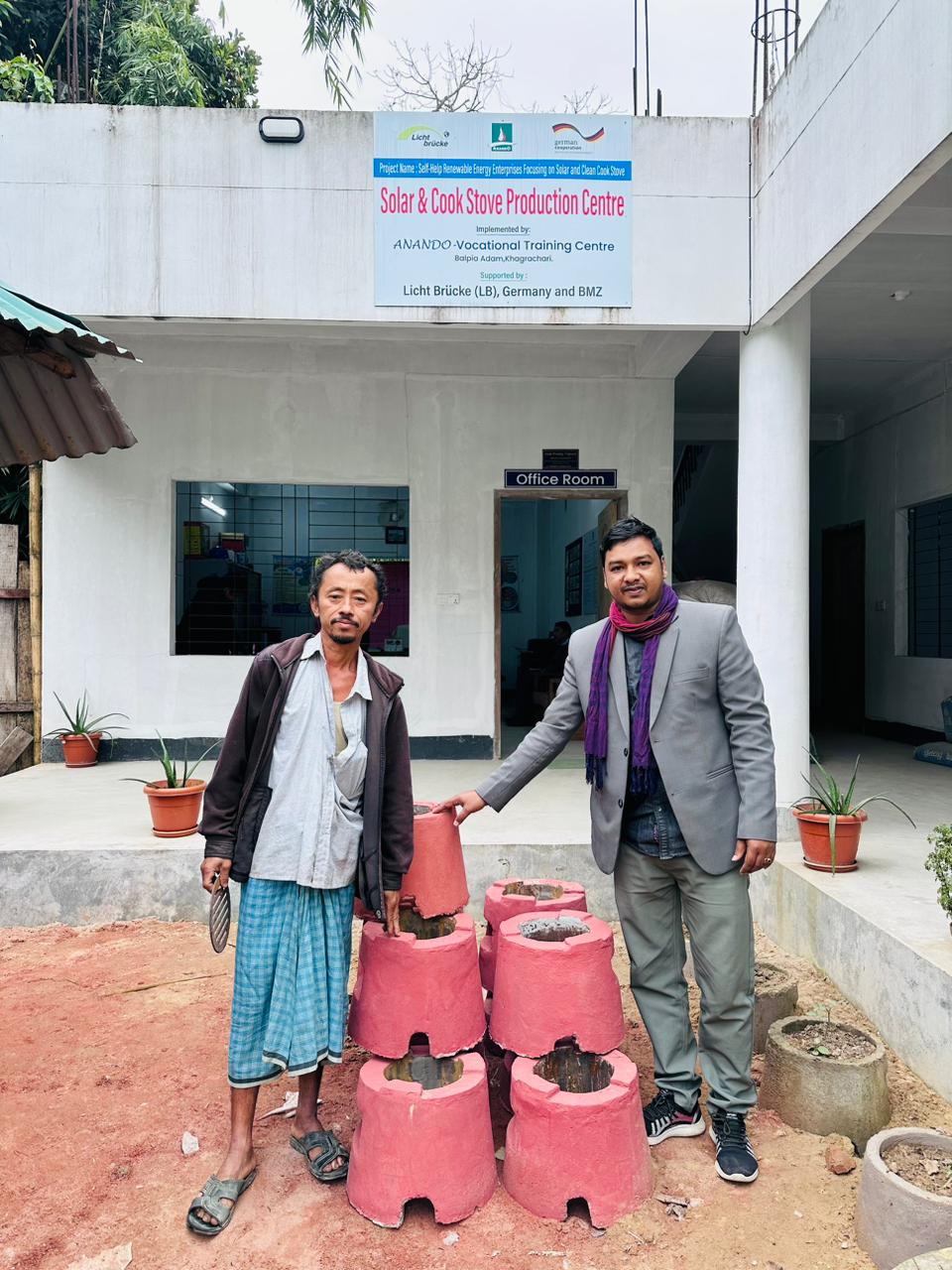
• The Solar Workshop and Clean Cookstove Production and Dissemination Centre is built, equipped and operational.
• 30 young men and women — two full batches — have completed solar energy training, passed their final examinations and begun earning from solar installation and maintenance work.
• 15 school-dropout youths (54% female) trained in clean cookstove production now operate the production workshop independently and earn their own income.
• 595 of 1,500 target families have been sensitised on energy-efficient clean cookstoves and use them daily — reducing indoor smoke in their homes.
• Health problems among women and children caused by traditional cooking methods have already fallen by 15% in the project area, on the way to the 30% end-of-project target.
• Around 65% of the 2,000 community members reached so far report awareness of climate change effects and the advantages of climate-friendly technologies, and about 75% of surveyed target households are convinced users of renewable energy.
Our Approach
The project is built on a self-help enterprise model: rather than distributing hardware, it creates the local skills, production capacity and market demand that let clean energy sustain itself after the project ends. Trainees are the region's school dropouts — young people otherwise excluded from the economy — selected through social mapping and wealth ranking that prioritises the most vulnerable households, with deliberate gender parity in every batch. Training pairs technical trades with entrepreneurship, business networking and rights education, and graduates step into a market the project itself is cultivating through demonstrations, campaigns and advocacy. Monitoring, complaint and feedback mechanisms keep quality and accountability high, and activities delayed in the early years are being completed within the project period so that every objective is achieved by 2027.