
Project at a Glance
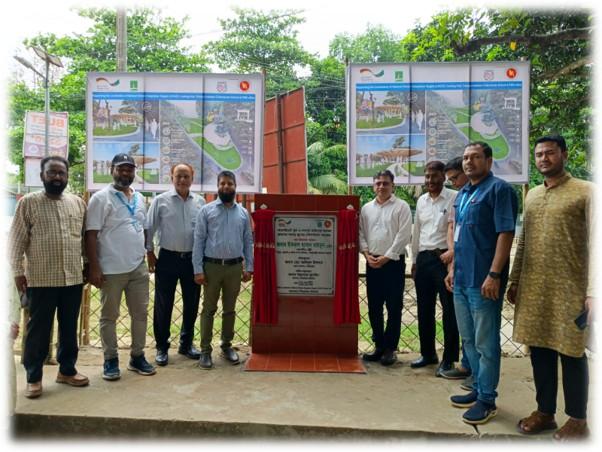
Project Title | Local Partnerships for Climate Action (LOCAT): Scaling Nature-Based Solutions and Biodiversity Management in Sirajganj and Chapai Nawabganj through Community-Led Demonstration Measures |
Duration | 18 months, delivered in three phases — Inception and Mobilisation (months 1–3), Demonstration and Implementation (months 4–12), and Consolidation, Institutionalisation and Exit (months 13–18) |
Locations | Sirajganj Pourashava (Jamuna floodplain, pop. ~189,000) and Chapainawabganj Pourashava (Barind Tract, pop. ~152,000) — two climate-vulnerable secondary cities in northern Bangladesh |
Supported By | Deutsche Gesellschaft für Internationale Zusammenarbeit (GIZ), providing technical and financial support under a financing arrangement |
Implemented By | ANANDO — Promotion of Culture and Youth Resource Development, in partnership with the two Pourashavas, schools and colleges, community-based organisations and local businesses |
Direct Participants | 2,000 households (8,180 people) — low-income urban women, youth volunteers, unemployed and underrepresented groups including persons with disabilities, urban poor residents of climate-vulnerable settlements, and students and educators |
Indirect Reach | 5,000 households (20,450 people) benefiting from cooler public spaces, restored ponds, clean water points and city-wide awareness |
Sectors | Urban climate change adaptation, nature-based solutions, biodiversity, water management, green livelihoods, women's and youth empowerment, local governance |
Why This Project
Secondary cities like Sirajganj and Chapai Nawabganj rarely draw the attention given to Bangladesh's major metros, yet they are on the sharp edge of climate change. Summer temperatures reach 40°C, rainfall is erratic, surface water bodies are shrinking and groundwater is falling — while rapid, often unplanned urban growth has paved over or polluted the ponds, canals and green spaces that once cooled these cities and absorbed their floodwater. The burden falls hardest on low-income neighbourhoods, where children, the elderly, women and informal workers face heat stress, water scarcity and waterlogging with few services to help them adapt. Municipal governments still lean on grey infrastructure, and visible, affordable, replicable examples of nature-based solutions are almost entirely missing. This project fills that gap with demonstration sites that people can see, use and copy.
Project Goal
To strengthen urban climate resilience in secondary cities of Bangladesh by demonstrating and scaling community-led, low-cost, nature-based climate change adaptation measures — reducing heat stress, water scarcity, groundwater depletion and urban flooding while improving citizen engagement in locally led climate action.
Specific Objectives
• Cooler, greener cities: Enhance local microclimatic conditions and environmental quality through nature-based demonstration measures in public spaces, educational institutions and neighbourhoods.
• Living ponds: Restore and sustainably manage urban ponds as multifunctional systems for water reuse, biodiversity support and climate risk mitigation.
• Community stewardship: Promote inclusive, locally led community engagement to manage and sustain the nature-based assets.
• Green livelihoods: Strengthen the adaptive capacity and economic resilience of vulnerable urban populations, especially low-income women and youth.
What We Do
• Create shaded green corridors along heat-stressed streets and footpaths using shade trees, trellised climbers and pergolas — improving walkability for pedestrians, street vendors and schoolchildren.
• Set up public cooling points in marketplaces, transport hubs and school zones, with shaded seating, tree canopy and traditional earthen water jars dispensing naturally cooled drinking water.
• Install rooftop gardens, vertical vegetable gardens and green walls — built from reused plastic containers — on schools, colleges and community buildings, and plant urban micro-forests on campuses and vacant public land.
• Rehabilitate degraded urban ponds through desilting, bio-filtration, floating wetlands, aquatic vegetation, shoreline greening and the reintroduction of native and endangered fish species.
• Install solar-powered water filtration units (including ozone treatment) supplying clean water to public drinking points and cooling stations, with a pilot water-vending service run with local businesses on a cost-recovery basis.
• Build stormwater access points, rainwater harvesting and groundwater recharge structures in schools, public spaces and residential premises to manage monsoon runoff.
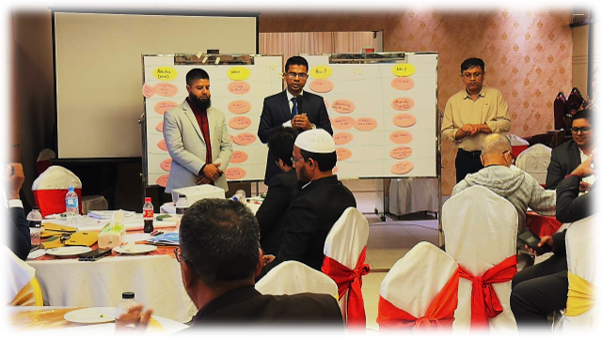
• Form Site-Level Management Committees — bringing together Pourashava officials, school representatives, women, youth and persons with disabilities — and youth-led Neighbourhood Watch groups to protect and maintain the new green assets, supported by QR-coded educational signage and interactive climate learning in schools.
• Establish women-led, climate-smart micro-enterprises and cooperatives in composting, climate-adapted nursery management, solar food drying and urban vertical agriculture, linked to municipal Sales-cum-Display Centres for fair market access.
• Introduce a community-based revolving savings fund offering interest-free loans, a transparent profit-sharing model, and financial literacy and enterprise development training.
Expected Results
• Improved thermal comfort and reduced surface heat in high-risk areas of both cities through green corridors, shading and cooling points.
• Increased urban greenery and biodiversity through rooftop and vertical gardens, micro-forests and pond-edge vegetative buffers.
• Restored ponds functioning as biodiversity hubs and water sources, with enhanced stormwater retention, rainwater harvesting and groundwater recharge.
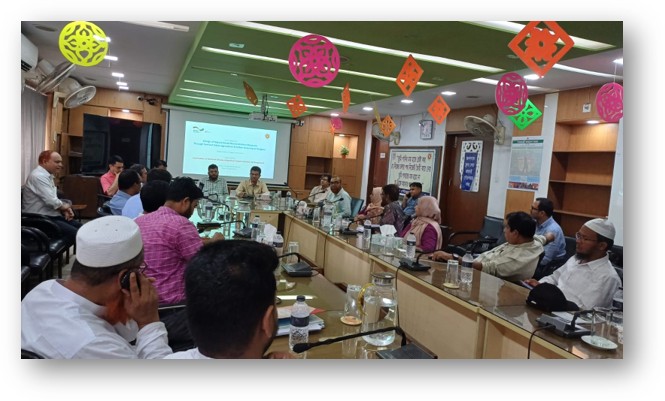
• Functioning, inclusive local management structures — Site-Level Management Committees and youth Neighbourhood Watch groups — sustaining the assets beyond the project.
• Improved household food security and nutrition through rooftop and homestead vegetable gardening in schools and communities.
• Women and youth running viable green enterprises with increased leadership and agency in local climate action.
• A tested, evidence-based and replicable model of integrated urban adaptation for scaling across Bangladesh's secondary cities.
Our Approach
The project treats residents not just as beneficiaries but as co-creators and custodians of their urban environment. All demonstration measures are implemented on public land, with sites co-selected by the District Commissioner's office and the municipal administrations to guarantee neutrality and equitable benefit; schools and colleges are nominated by the municipalities, and whole communities or slum clusters — rather than individual households — are selected for livelihood activities to prevent favouritism. Working across two cities with distinct ecologies enables comparative learning about what works, where and under which conditions, feeding national strategies for climate-resilient urban development. Sustainability is engineered in from the start: cost-recovery water vending, cooperative enterprise models, a revolving savings fund, operation-and-maintenance training for Pourashava teams, and formal handover of assets to schools, municipalities and community committees. ANANDO contributes the time and expertise of its senior technical staff in-kind, reflecting its co-ownership of the initiative.