Project at a Glance
Project Title | Girls Hostel and Tailoring Training at Khagrachari Project |
Current Phase | January 2024 – December 2026 (tailoring training offered since 2008; the residential hostel added in 2015) |
Location | Khagrachari town, Khagrachari district, Chittagong Hill Tracts (CHT) |
Supported By | Licht Brücke (Lichtbrücke e.V.), Germany |
Implemented By | ANANDO — Promotion of Culture and Youth Resource Development |
Training Offered | One-year tailoring and dressmaking course — 10 months of classroom-based theoretical and practical training plus a 2-month workshop attachment in the local market |
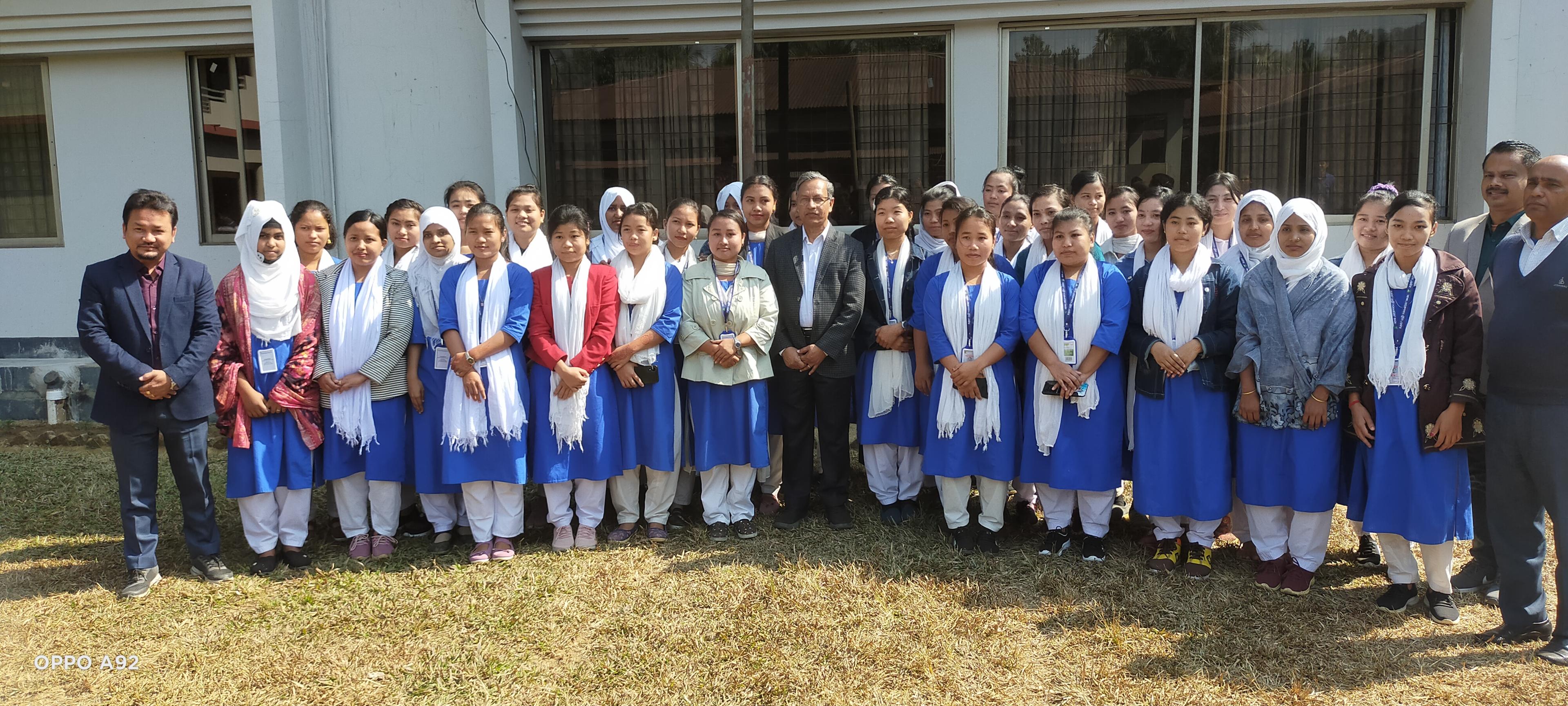
Target Group | Poor, unemployed adolescent girls and young women from remote hill villages, predominantly from the CHT's ethnic minority communities — 30 girls per year, of whom 20 receive full hostel accommodation and meals and 10 non-residential trainees receive food support |
Phase Target | 90 young women trained in tailoring over 2024–2026, with 60 receiving accommodation and meals and 20 receiving non-residential food support |
Track Record | 630 girls admitted and 559 graduated since 2008, with 446 in employment — 103 in jobs and 343 self-employed — an employment rate of nearly 80% |
Why This Project
Nearly half the population of the Chittagong Hill Tracts belongs to small ethnic communities where poverty is high, literacy is low and technical education is scarce — and girls from remote hill villages face the steepest barriers of all. Many drop out of school early with no pathway to skills, employment or economic participation. When ANANDO began offering tailoring training at its Khagrachari Vocational Training Centre in 2008, it found that distance and the lack of safe accommodation kept the most vulnerable girls away. The Girls Hostel, opened in 2015, removed that barrier: with secure lodging, meals and a supportive learning environment, girls from the remotest communities can now access training that would otherwise be out of reach.
Project Goal
To involve 90 poor adolescent girls from the hill communities in income-generating activities and help them become self-dependent through technical skills development — advancing women's economic empowerment, gender equality and poverty reduction in the CHT, in line with Bangladesh's TVET priorities and the Sustainable Development Goals.
How the Project Works
• Skills training: A structured one-year tailoring and dressmaking curriculum combining theory, hands-on practice and project work, assessed through weekly, monthly, quarterly, mid-term and yearly examinations, and concluding with certification.
• Workshop attachment: Every trainee completes a two-month attachment in local tailoring workshops, gaining real market experience that frequently leads directly to jobs or informed self-employment.
• Safe residence: Twenty hostel seats with food and lodging give girls from remote, hard-to-reach villages a safe place to live and learn; ten non-residential trainees receive food support so poverty is never a barrier to attendance.
• Evening learning: Regular evening sessions build self-esteem, social awareness and understanding of women's rights, alongside Bangla and basic English communication skills, first aid, and health and safety awareness.
• Enterprise pathways: Entrepreneurship orientation, exchanges with experienced business owners and stakeholder sessions with guardians and local entrepreneurs prepare graduates for self-employment and connect them to opportunities.
• Participatory selection: Trainees are recruited through community outreach — announcements, posters, leaflets and referrals — followed by home visits and consultations with parents, ensuring the most needy and committed candidates are enrolled.
• Beyond the classroom: Recreational and indoor sports facilities, cultural events and a formal certificate ceremony each year support the girls' confidence and holistic personal development.
Results and Impact
• 559 girls have graduated in tailoring since 2008, from 630 admissions.
• 446 graduates — nearly 80% — are economically active: 103 employed in tailoring shops and garment units and 343 running their own businesses as self-employed entrepreneurs.
• In 2025, all 30 trainees of the 19th batch completed the course and passed their final examinations — 100% of the annual target.
• Graduates now support their families financially, contributing to household education, treatment and healthcare costs.
• Growing community ownership: guardians, local government, workshop owners and community leaders participate in admissions, ceremonies and stakeholder sessions each year.
Our Approach
The project pairs hard skills with the conditions girls actually need to use them: safe accommodation, food security, life skills, language confidence and links to the local market. Training is aligned with genuine market demand in Khagrachari, and the two-month workshop attachment means employers meet the graduates before they ever apply for a job — one reason self-employment and placement rates remain consistently high. The residential model has proven especially transformative for ethnic minority girls from the remotest villages, for whom the hostel is often the first realistic route to education and income of any kind. After seventeen years, the programme stands as one of the CHT's most sustained investments in young women's economic independence.