
Project at a Glance
Project Title | Community-based programme for climate-resilient and sustainable livelihoods in coastal areas of the Satkhira district, Bangladesh (Project No. 8019 / WHH: BGD 1057) |
Duration | November 2024 – October 2027 (36 months) |
Locations | Satkhira district — urban slums of Satkhira Municipality (Wards 5, 7 and 9) and rural communities in Fingri Union (Satkhira Sadar Upazila) and Kulia and Parulia Unions (Debhata Upazila) |
Funded By | German Federal Ministry for Economic Cooperation and Development (BMZ) through Deutsche Welthungerhilfe e.V. (WHH) |
Implemented By | ANANDO (lead local partner — WASH infrastructure, climate-smart agriculture, vocational training and advocacy) and Prerona (women's entrepreneurship and green enterprise development) |
Direct Participants | 5,000 households — 25,000 people (55% women), including 1,250 urban slum households of predominantly climate-migrant families and 3,750 rural households; plus 200 government representatives and 30 partner staff |
Indirect Reach | 22,824 neighbouring households — approximately 105,528 people across the target areas |
Sectors | Climate change adaptation, WASH, food and nutrition security, climate-smart agriculture, women's economic empowerment, green jobs, local governance |
Why This Project
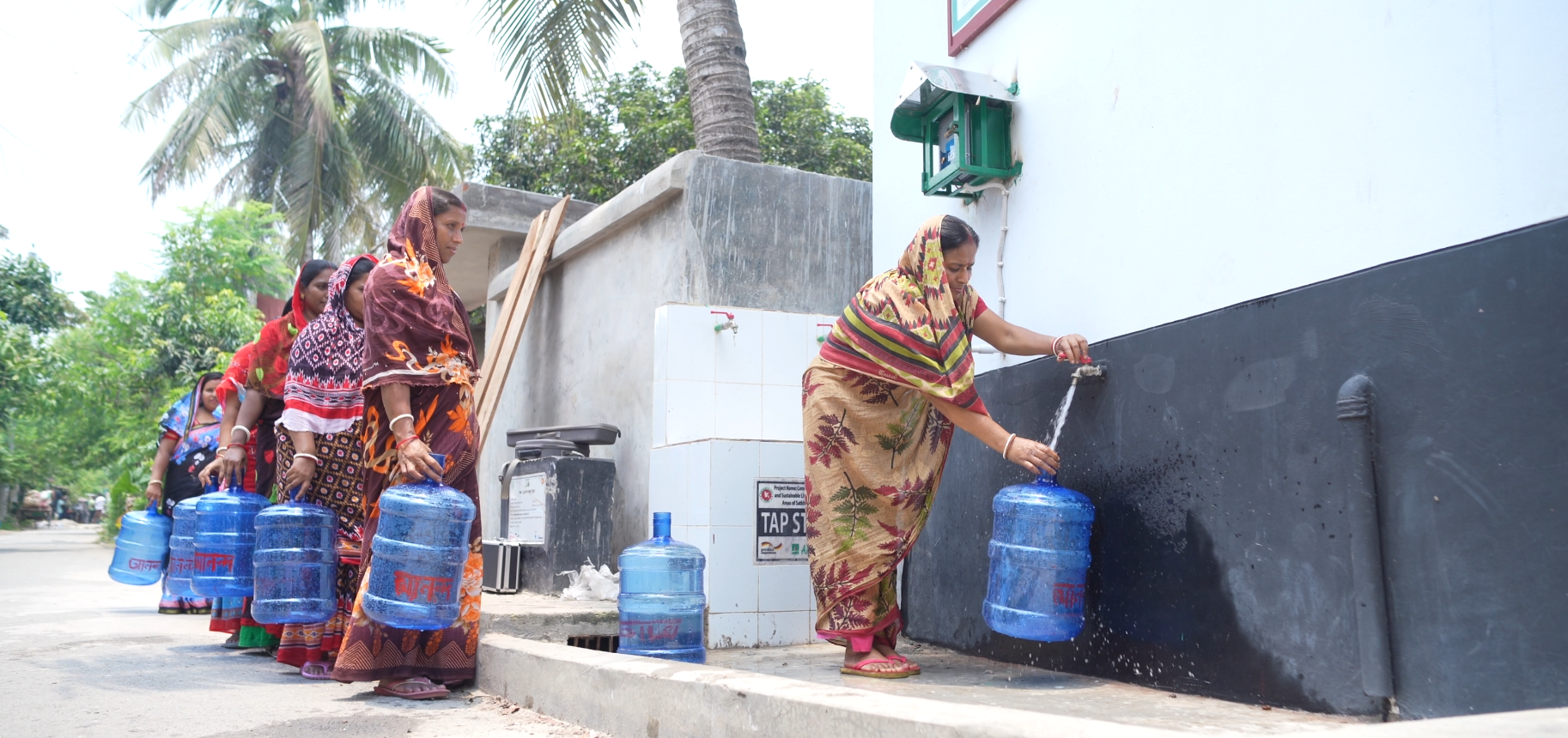
South-western coastal Bangladesh is on the front line of the climate crisis, and Satkhira district bears its brunt — cyclones, salinity intrusion, depleted groundwater, waterlogging and extreme heat are eroding livelihoods, health and food security. In Satkhira town, around 60% of slum residents are climate migrants who were displaced from their villages and now live without secure services, adequate sanitation or reliable safe water. In the surrounding rural unions, saline soils and water scarcity undermine farming, women and girls walk long distances to fetch water, and households have few options to diversify their income. The project responds to these interconnected pressures with an integrated package of water, sanitation, climate-smart agriculture, women's enterprise and local governance support.
Project Goal
5,000 households from marginalised communities in Debhata Upazila, Satkhira Sadar Upazila and the urban slums of Satkhira Municipality are less vulnerable to the negative effects of climate change on their health and finances — contributing to improved resilience of vulnerable communities across Satkhira district.
Specific Objectives
• Safe WASH: 5,000 households gain access to improved and safe basic water supply and sanitation.
• Resilient food production: Households benefit from diversified, climate-adapted agricultural production all year round.
• Women's enterprise: 200 at-risk women build entrepreneurial skills and enter the green labour sector.
• Climate governance: 200 local government representatives are better connected and align their policies, plans and budgets with shared climate-resilience goals.
• Partner capacity: The organisational and technical capacities of the implementing partners, ANANDO and Prerona, are strengthened.
What We Do
• Establish and strengthen 100 self-help groups (60 urban, 40 rural) that represent women, Dalit and minority households, elderly people and persons with disabilities.
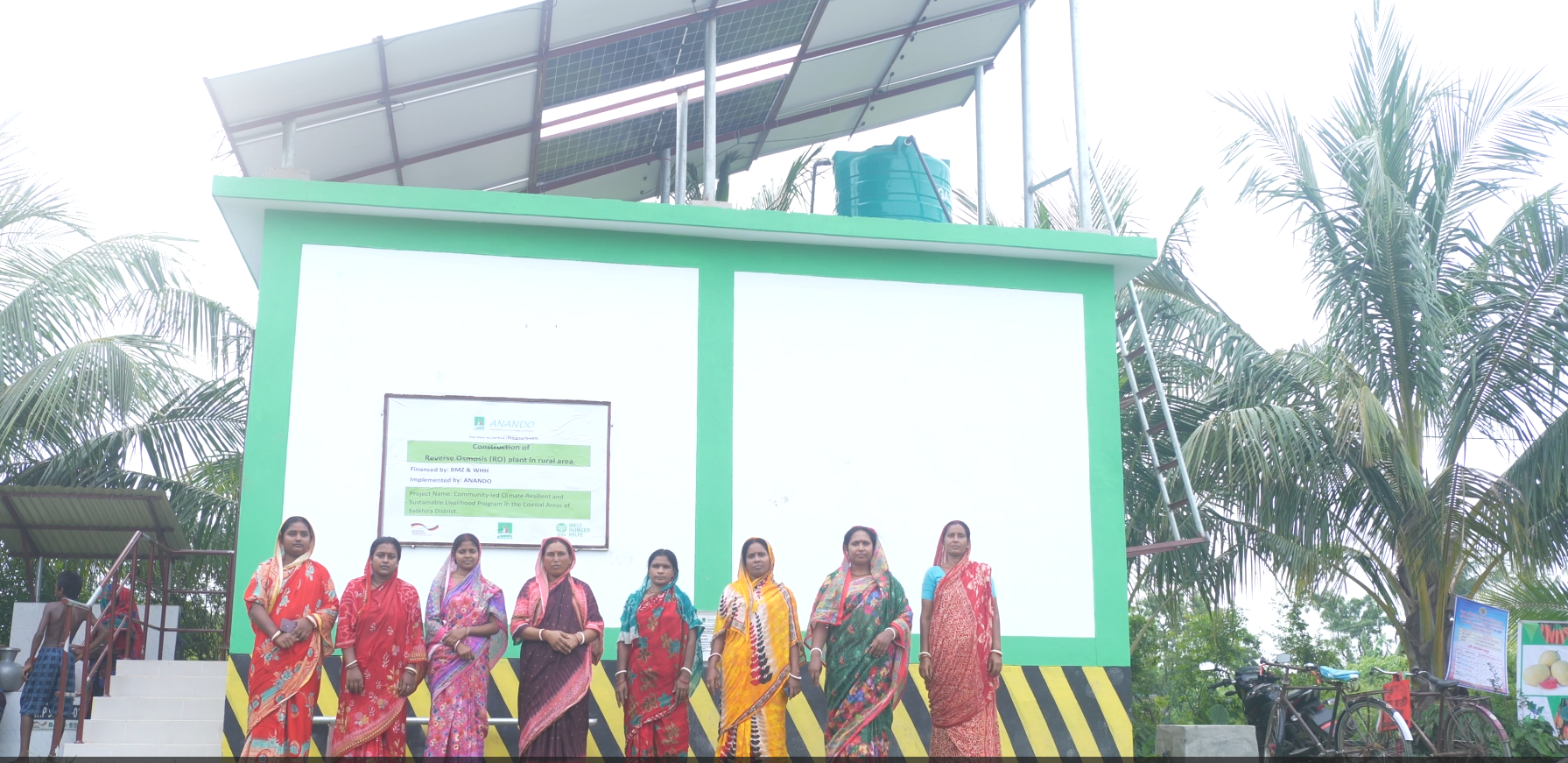
• Build climate-resilient water infrastructure — including a solar-powered water supply system and reverse osmosis plant providing 850 households with 20 litres of safe water per person per day — alongside water recycling filters.
• Construct 70 flood-resistant double-pit latrines on raised platforms and 500 metres of tertiary drainage in the three slum wards.
• Introduce community solid waste management with household bins, a collection system and a plastic-exchange 'eco-shop' run with the municipality.
• Support 2,500 households to create climate-friendly home, roof and sack gardens, backed by four urban community gardens, 30 Climate-Resilient Farmer Field School model farms, poultry support and local vaccination services.
• Set up an open-access Centre for Vocational Learning and Growth with production and sales facilities, and establish women-led enterprises producing recyclable, biodegradable sanitary napkins — improving both incomes and menstrual health.
• Deliver 50 mass awareness sessions on gender-based violence, child marriage, hygiene and climate risks.
• Facilitate advocacy, coordination and training so that the municipality, Upazila Parishads and line departments embed climate-resilient measures in their annual development plans, informed by joint research with the BRAC James P Grant School of Public Health on climate change, food systems and health in Satkhira.
Expected Results by 2027
• 850 households enjoy improved safe water supply; 3,000 households (60%) benefit from improved sanitation and hygiene and face fewer health risks.
• 3,000 households (60%) practise climate-adapted agricultural production; half of all households diversify their income and reduce expenses.
• Women in 2,500 supported households achieve a 30% increase in minimum dietary diversity (MDD-W).
• 1,500 households with green roofs report cooler homes and fewer heat-related health complaints.
• 360 women and adolescent girls take up employment or self-employment earning around BDT 10,000 (approx. €100) per month.
• 140 of 200 trained women run women-led green enterprises, and 60% of women and girls involved adopt improved menstrual hygiene practices.
• One municipality, two Upazila Parishads and five government departments integrate climate-resilient measures into their annual development plans.
Our Approach
The project takes a community-led, gender-transformative approach built on participatory targeting: households are selected through Participatory Rural Appraisal and well-being ranking, prioritising female-headed, Dalit and minority households, persons with disabilities, extremely poor families and youth aged 15–29. It combines 'hardware' (water systems, latrines, drainage, a vocational centre) with 'software' (self-help groups, skills, behaviour change and advocacy), and deliberately links urban climate migrants and rural communities within one district-wide resilience strategy. The design draws directly on lessons from three earlier pilots in Satkhira and aligns with the Satkhira Master Plan 2023–2043 and Bangladesh's National Adaptation Plan. Accountability is ensured through a Complaint, Feedback and Response Mechanism (CFRM), safeguarding standards, and a robust MEAL system developed jointly with the partners.